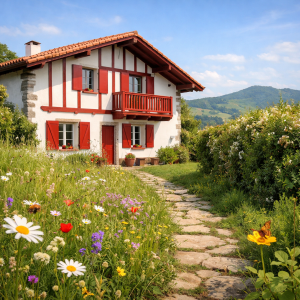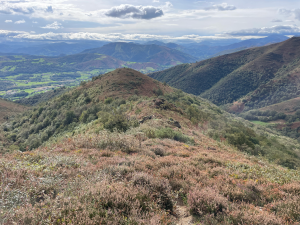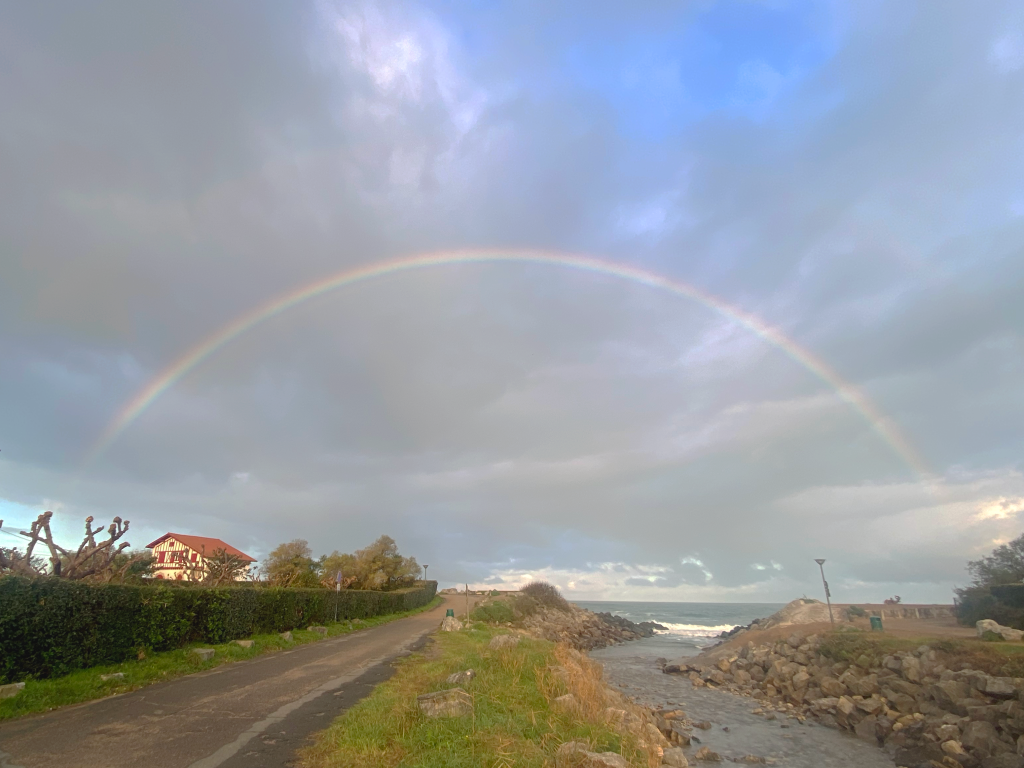
A rugged place with a changing water reality
Even before the climate started changing more rapidly, the Basque Country was known for its unpredictable weather, torrential rain, and microclimates. It has never been the easiest terrain for agriculture. Its ruggedness made farming harder, and for centuries that helped keep much of the land of little interest to temporary kings and empires. Today, that same ruggedness is increasingly appreciated by those drawn to mountains and the ocean.
Some of these same characteristics also shape our gardens. Wind, rain, and sun can all come with a bit more force than in gentler climates. Add salt in the air in coastal areas, steepness almost everywhere, and soils that are often compacted or clay-rich, and you do not exactly get the conditions gardeners dream of. Still, that is a small price to pay for living in such an extraordinary place — more rugged, yet quieter, tastier, and healthier than most, if not all, of the continent.
And yet, for all this rain, water is becoming an increasingly important gardening issue. Summers are becoming hotter and drier, and water stress is becoming more common. Sprinkling a picture-perfect lawn in the middle of a heatwave may not seem all that expensive, but the price we pay for water still does not fully reflect how precious the resource really is. Because water has so often seemed abundant here, we have grown used to treating it that way. But times are changing. So this seems like a good moment to talk a bit more about water — how it works, why it matters, and what a good garden should actually do with it.
One country, many water realities
The Basque Country is shaped by water, but not evenly. The north and west are much wetter under Atlantic and mountain influence, while farther inland and south conditions can already become much drier. Water does not all follow the same route either: inland it gathers into larger river systems, feeding basins such as the Adour in the north and the Ebro farther south, while near the coast it often reaches the Bay of Biscay more directly through shorter rivers like the Bidasoa, Nivelle, Uhabia, and Urumea. So there is no single Basque climate or soil, and gardens should respond to place.
But before that water reaches the sea, life needs to quench its thirst. All terrestrial life depends on sweet rainwater, and on the land that receives it, stores it, filters it, and releases it again. Healthy soils do not just hold plants up. They help water infiltrate, remain available to roots, and move more slowly through the landscape. Poorly structured, compacted, crusted, or sealed soils do the opposite: they shed water as runoff.
A good garden behaves like a sponge
That matters for gardens too. A good garden is not just pretty. Hydrologically, a good garden behaves a bit like a sponge. It catches rain where it falls, lets it enter the soil, shades the ground, feeds soil life, and keeps moisture available for longer. A bad garden behaves more like a drain: rain hits bare ground, compacted ground, paving, or gravel, then rushes off, puddles uselessly, or disappears into a sewer before plants and soil life can really benefit.
A garden may be small, but it is not hydrologically private. It is often just a small patch of land surrounded by roofs, roads, walls, terraces, and driveways that disrupt the flow of water tremendously. What you seal, compact, drain, or irrigate affects more than your own flowers. It affects your neighbour, your street, the sewer network, and eventually the river.
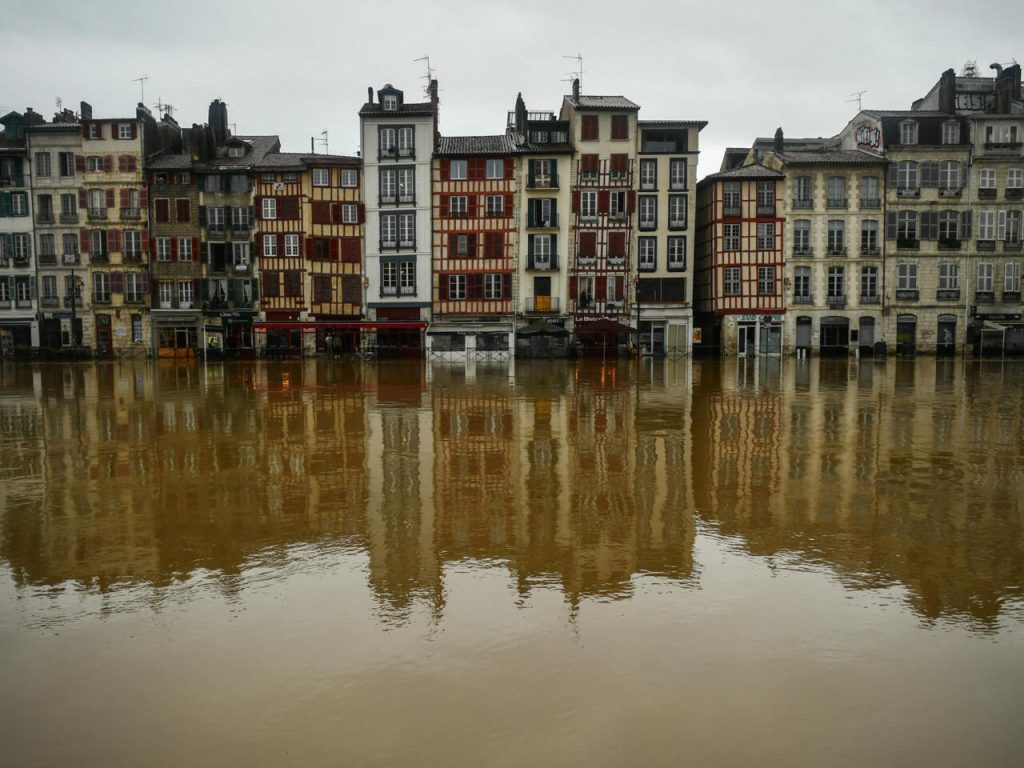
The same logic applies at landscape scale. Floods happen when too much water reaches rivers too quickly. That can be because rainfall is extreme, but also because too much land upstream has been compacted, drained, paved, straightened, or otherwise degraded. In an ecologically thriving landscape, water is retained for longer, nourishes more life, and only its surplus reaches streams and rivers. Plants, roots, organic matter, shade, and healthy soil structure all help slow the journey. That is true at landscape scale, and it is true in a garden too.
Water is precious, even where it feels abundant
In Botswana, the word for money and rain is the same: Pula. Places that have not had the luxury of abundant rainfall often appreciate its value more deeply. Much of Europe has not exactly been shaped by that same sobriety, and most of us spend very little time in awe of water, grateful for it, or even curious about it. Let’s hope we learn before reality forces us to.
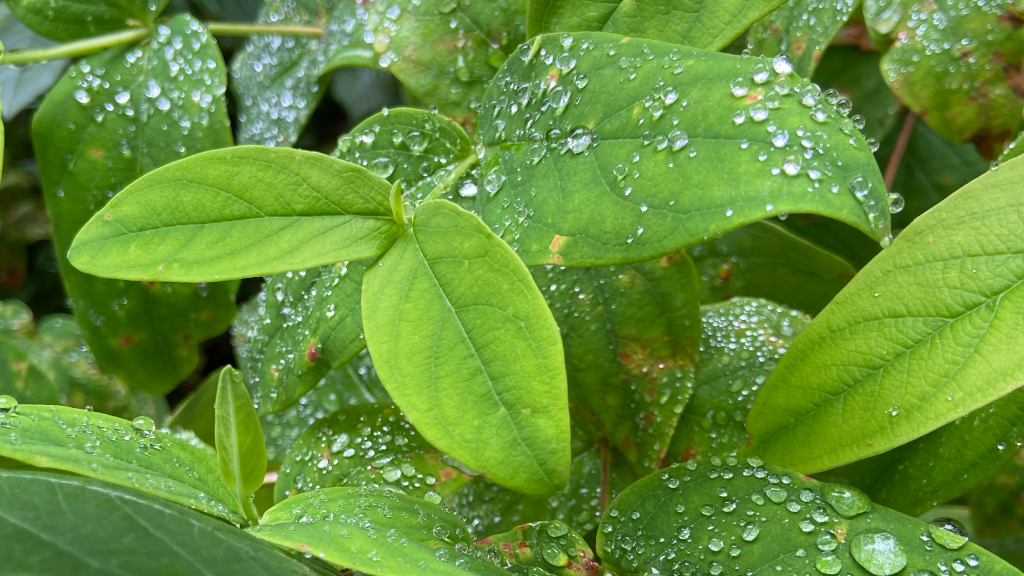
A lucky raindrop that lands in a healthy garden may stay there for quite a while, nourishing plants and soil life before eventually evaporating or moving downward through the ground. An unlucky one lands on paving, compacted soil, or a sealed surface and is quickly sent away — into a puddle, a drain, or straight into the sewer with the flushings of our toilets. That is the difference, and let’s face it: we prefer more lucky raindrops.
We cannot transform our soil overnight, and many Basque gardens — especially in the wetter Atlantic part — do struggle with soils that are compacted, overused, or heavy. But that does not mean the answer is to give up and reach for the hose. It means we need patience. We need to disturb the soil less, keep it covered, add organic matter, and plant species that help open and stabilize it over time. The goal is not to force the garden into looking Mediterranean, ornamental, or hyper-controlled. The goal is to make it more alive, more absorbent, and less thirsty.
Before we had sprinklers and drinking water coming from our taps, agriculture — and gardening, which is really quite a modern hobby — depended on slowing water down. Ancient societies, especially in drier climates, became highly skilled at retaining precious rainfall for as long as possible. We tend to forget this, but farming and gardening once relied almost entirely on natural rain and on the capacity of land to receive and hold it. And while farming is never easy, doing it with rainfall alone is a good deal trickier than the version many of us know today.
For gardens, that older logic is not some romantic inconvenience, but a valuable challenge worth embracing. It is a more sober, sensible, and socially responsible way of gardening. Let’s face it: we would rather keep water for our own survival than for the hydrangeas. Previous droughts unfortunately suggested otherwise, as people watered their gardens despite it being prohibited. And after a surf session, most of us quite like a rinse too. But water is becoming more precious, and our gardens should adapt accordingly. Let’s not waste that money rainwater.
What this means for your garden
For our gardens, this means a few simple things.
First, let’s avoid planting species that require more water than local rainfall and soils can reasonably support. Native species are often the safest choice, and even when we use non-native ornamentals, we should favour species that fit local conditions rather than fight them. Some commonly planted exotics, such as eucalyptus or bamboo, can be very water-demanding and are not exactly helping us garden more soberly.
Second, look closely at your soil. Observe it when it rains. Where do puddles form? Where does water rush away? Where does the surface harden and crack later? Where does the sun bake the ground dry? Those observations tell you far more than a gardening catalogue ever will. Open up compacted spots where you can without constantly turning the whole garden over. Add compost or other organic matter. Mulch. Keep the soil covered. Plant roots that hold and loosen the ground. In short: build a living soil, not just a decorative surface.
Third, think of your garden as a place to store rain, not just survive it. A water tank is one of the easiest things you can add. A 2,000-litre one can cost around €200 and lets you keep rainfall that would otherwise rush off your roof into an overloaded sewer. A roof of 100 square metres can receive a remarkable volume of water over a year — in Biarritz, roughly 147 cubic metres on average, and in wetter parts of the Basque Country even more. That is a serious amount of water. Capturing even part of it makes obvious sense.
So no, you do not need to become a Mesopotamian engineer and build canals, tunnels, and reservoirs in your front garden. But you can absolutely begin to treat rainfall as something precious: something to slow, to keep, and to use later.
A final thought
That, in the end, is the point. A garden is not just decoration, and it is not hydrologically private. It is a tiny part of a much bigger living system. And in the Basque Country, where rain has always shaped the land, a good garden is not the one that looks the most controlled. It is the one that holds water, supports life, and asks a little less from the tap.
This was the last of our three spring gardening articles. I hope you enjoyed them. More importantly, I hope they help make gardening feel a little less like decoration, and a little more in tune with our environment.