The cost of tidiness.
Our obsession with tidiness is out of control, and it puts ecological pressure on the Basque coast.
The Basque Coast is depicted as a post card, traditional, clean and an authentic tourist destination. White houses, orange rooftops and Basque red, green or blue shutters and other woodwork. Hedges are squared, lawns are mown short and our trees are disciplined into terrace covers.
Post cards are unfortunately very quiet places, where nothing moves, buzzes or chirps. At Rewilding Euskal Herria, we are in love with the Basque Country, and definitely also with its charming houses, streets, villages and towns. What we like less is when our urge for tidiness hurts nature.
When thousands of gardens along a densely populated coastline are managed in the same way, the cumulative effect is enormous.
A fragile season we keep interrupting.
Spring is not just “garden prep season.”
It is the most sensitive ecological window of the year.
Across France, 80% of wild plant species flower between March and June. This is also the peak emergence period for pollinators: bees, hoverflies, solitary wasps, butterflies.
Insects are not a decorative detail in this story. In Europe, around 75% of crop species depend to some degree on pollination. And our pollinator populations are in sharp decline.
The Basque coast is also part of a migration corridor for many bird species moving between Iberia and northern Europe. Insects are their fuel.
Now imagine what happens when early spring looks like this:
- Lawns cut weekly from March onward
- Hedges shaved before flowering
- Roadside verges trimmed before seed set
- Leaf litter removed
- Dead stems cleared
We do this as “maintenance”, but ecologically, it is interruption.
Many insects overwinter in hollow stems, leaf litter, and soil just beneath grass. Early mowing and pruning can destroy larvae and cocoons before they emerge. A single square meter of undisturbed meadow can contain hundreds of invertebrates — a tightly mown lawn contains almost none.
Spring is the season of emergence. It is when energy budgets are lowest and vulnerability highest. Plants are pushing new growth. Insects are developing. Birds are nesting.
And this is exactly when we start the machines.
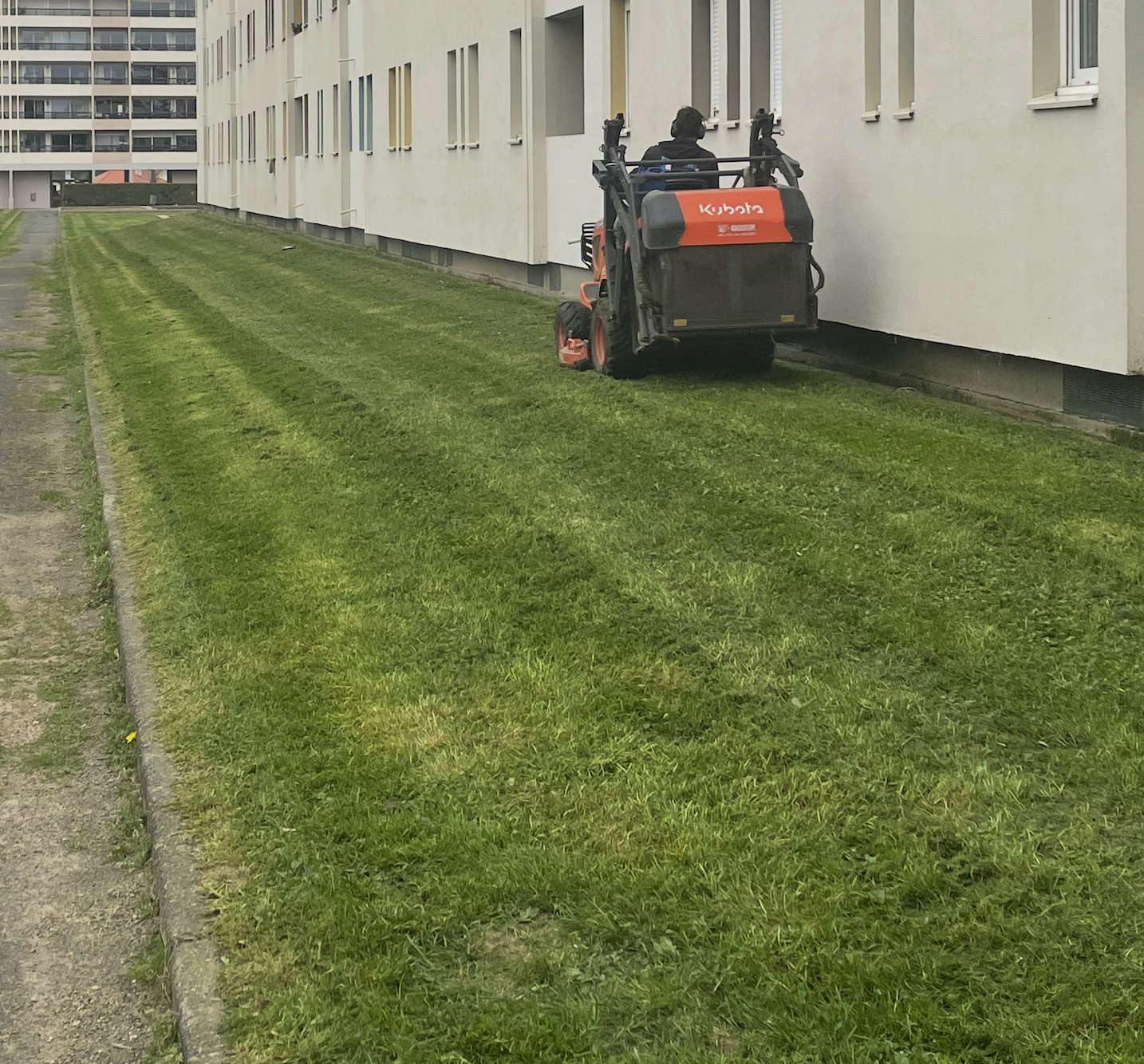
The epicenter of tidiness: mowing our lawns.
Green lawns have become the standard outfit for gardens, public spaces and countless unused corners around the world—often irrigated, fertilized, and almost always cut too short.
At first glance they seem like nature: green, living, harmless. But ecologically, a tightly mown lawn is one of the least productive surfaces you can maintain.
Most lawns consist of just a few grass species, like:
- perennial ryegrass (Lolium perenne)
- red fescue (Festuca rubra)
- Chewings fescue (Festuca rubra commutata)
- Kentucky bluegrass (Poa pratensis)
These grasses evolved in grazed meadows where animals kept vegetation short, which is why they tolerate constant mowing.
The cultural obsession with lawns began in 17th- and 18th-century England, where aristocratic estates maintained short grass around manor houses as a display of wealth—large areas of land that produced nothing. With the invention of the mechanical lawn mower in the 19th century, this aesthetic spread globally.
Ecologically, the consequences are significant: research from the UK and Germany shows that intensively mown lawns can support up to 90% fewer flowering plants than less frequently cut grass, which means fewer insects and fewer birds.
Short lawns also develop shallow root systems, reducing soil water retention—an important issue in climates increasingly marked by wet winters and dry summers.
In France, outdoor watering can account for up to 40% of household water use during summer, while fertilizer runoff from lawns contributes excess nitrogen to streams and estuaries.
The lawn itself is not evil, but the assumption that every garden must be a tightly trimmed green carpet is simply wrong, hurtful and a waste of energy.
Form over function: pruning our trees
Now we are entering sacred territory: our beloved plane tree (Platanus × hispanica) — although “our” is not entirely accurate.
This hybrid, born from the Oriental plane and the American sycamore, lines countless streets and squares across southwestern France because it tolerates pollution, compacted soils and harsh urban conditions while providing generous shade.
When mature and healthy, a plane tree can lower the temperature beneath its canopy by several degrees during heatwaves.
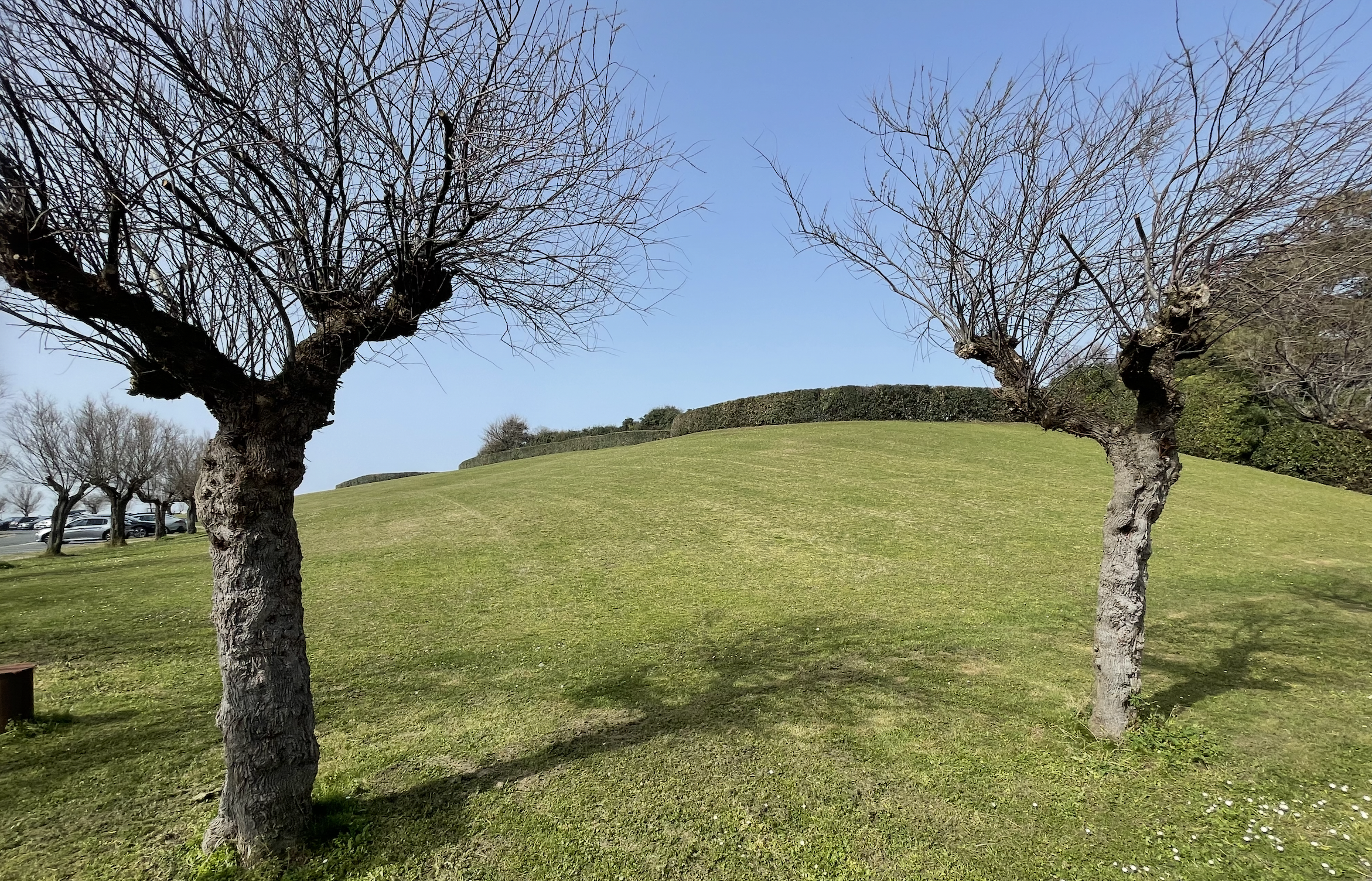
These trees are not simply pruned; they are pollarded. Pollarding is a long-established technique in which branches are cut back repeatedly to the same points, creating the familiar knuckled “heads” from which new shoots grow.
Historically, this allowed large trees to provide shade while keeping their size compatible with narrow streets and town squares.
The frequency of cutting matters, however. When plane trees are heavily reduced every year, the canopy becomes smaller and the tree produces dense clusters of fast-growing shoots.
Research shows that naturally grown plane trees can develop two to three times larger crowns, which means more shade, stronger cooling and more space for insects and birds.
For this reason, arborists often recommend pruning or pollarding every few years rather than annually, and preferably during winter dormancy (November–February) when sap flow is low and wildlife disturbance is minimal.
Managed thoughtfully, plane trees can continue to serve both roles that make them so valuable: providing shade and safety for people while maintaining the living canopy that supports urban nature.
Living on the hedge: trimming our hedges.
Hedges are another hallmark of the Basque landscape. They define gardens, line roads and separate properties, forming green walls that shape the character of villages and neighborhoods.
But ecologically, a hedge is far more than a boundary. It is a miniature ecosystem where birds nest, insects feed and small mammals find shelter.
In fragmented landscapes, hedges also act as corridors that allow wildlife to move through the countryside.
Many of these benefits disappear when hedges are trimmed too frequently or too early in the season.
Across Europe, the main nesting period for garden birds runs roughly from March to July, and dense hedges are among their most important nesting sites. Cutting during this period can destroy nests or remove the protective cover birds rely on.
Frequent trimming also prevents flowering and fruiting. Plants such as hawthorn or elder normally provide nectar for pollinators in spring and berries for birds later in the year—resources that disappear when hedges are shaved several times a season.
This does not mean hedges should be left unmanaged. But timing matters.
A single cut in late summer or early autumn, after the nesting season, often keeps hedges tidy while allowing them to support wildlife throughout spring and summer.
A hedge does not need to be perfectly squared to be beautiful. At its best, it is a living edge.
Where intervention actually makes sense
None of this means gardens should become jungles. Of course you’d like to walk over to the house without needing a machete. Of course you like short grass where you place your sun chair.
But the default shouldn’t be short, it should be wild.
Mow where you walk or play and consider leaving other areas to grow wilder. A narrow path through taller grass provides the same access while allowing flowers to bloom and insects to develop.
Timing matters too.
Delaying the first mow until late May or June allows spring plants to flower and set seed, and gives pollinators the time to emerge.
Even small changes — mowing less frequently, setting the blade higher, trimming only what is necessary, or pruning every other year instead of every year — dramatically increase the ecological value of a garden.
Beyond natural aspects, there is also the pollution and noise of intervention. Somehow gardening tools are noisier and more polluting than cars, trucks, buses and trains. Obviously, because these engines are cheaply made and their effects are less regulated.
This pollution and noise is already a fantastic reason to intervene less, and other species like birds and insects will agree.
These choices matter even more in shared spaces. The gardens around apartment buildings, company grounds, hotel lawns and municipal green areas often cover far more surface than private gardens.
If you live in or manage such a place, speak up. Ask for later mowing, fewer cuts and more seasonal management.
A small change in maintenance schedules across these larger spaces can have a surprisingly large ecological impact.
A little bit less control and a lot more wild.
Fortunately, the alternative is not chaos.
A garden can be a little less tidy and far more alive.
Lawns can include patches of longer grass and wildflowers. Hedges can grow thicker and flower before being trimmed. Fallen leaves and stems can remain through winter as shelter for insects.
Even small gardens can become miniature habitats if we allow them a bit of seasonal freedom.
Along a coastline as densely inhabited as ours, these small choices matter.
When thousands of gardens shift from constant trimming to thoughtful, seasonal management, the result is not a messier Basque coast — but a richer, quieter and far more vibrant one.